
Low-density polyethylene (LDPE) plastic bale wrap is used in agricultural bale wrap to preserve crops such as hay or straw that will later be fed back to livestock as feed.
Current practices for dealing with agricultural bale wrap waste state often include landfilling or burning; this poses problems for farmers as it has environmental ramifications.
Compression
 Low-density polyethylene (LDPE), commonly used to wrap hay and silage bales, provides strength, durability and water resistance. Furthermore, this recyclable material can be combined with another commercial polymer to produce sustainable bale wrap solutions.
Farmers can opt between individually wrapping or in-line tube wrapping their bales. Both methods offer distinct advantages to farmers: individually wrapped bales can be easily moved around with a squeeze loader attachment, while in-line tube wrapping saves time by decreasing the number of layers required per bale.
No matter the method chosen, crops must have the appropriate moisture level when bales are wrapped to ensure an effective fermentation process and to avoid spoilage of the bale from too little oxygen or too much air entering during fermentation – this may disrupt preservation or cause spoilage; by covering correctly with wrap, preventing such disruption is possible.
Storage
Farmers using bale wrappers can cut, bale and wrap hay all in one day with minimal time wasted on twine or net wrapping methods. Although more costly, bale wrappers save farmers both money and effort in terms of efficiency.
Agricultural bale wrap protects hay and other green fodder by sealing it airtight to keep it fresh throughout winter months for use by farmers to feed their animals or sell. Constructed of LLDPE material, Western Packaging can assist farmers in selecting an ideal silage wrap solution to fit their individual needs.
B-Wrap, John Deere’s new high-tech hay wrapping system, offers an innovative alternative to twine and plastic net wraps. It combines two wraps of John Deere’s CoverEdge net wrap with one wrap of structured composite material, which sheds water while still allowing airflow around the bale. This process helps hay ferment more readily over time, keeping freshness at a maximum.
Transportation
Agricultural bale wrap can be costly to transport unless compressed using a baling machine, but compressed bales make handling and transporting much simpler and cost-efficient. Baling machines compress this loose material into uniformly sized dense bales that are easier for farmers to handle and transport while reducing storage space requirements, saving money over time and improving silage and hay preservation for later animal consumption.
Tube wrapping is an effective and time-efficient solution that can reduce harvest loss and the time necessary to create bales while increasing productivity by 30% per hour compared to twine wrapping. Unfortunately, tube-wrapping requires special equipment that may be more costly than single-bale wrapping; furthermore, tube-wrapped bales must be stored outdoors and can be challenging to inspect; nonetheless, it still stands as an efficient means of silage preservation for livestock.
Recycling
Farmers have an opportunity to recycle their bale wrap once it has been used, thanks to the Recycling Agricultural Plastics Program (RAPP), which has been collecting plastic waste that would otherwise end up in landfills or polluted open fires and recycling it into sidewalk pavers, plastic lumber products and oils and waxes that can be used as livestock feed.
Producers have increasingly turned to clear plastic bale wrap. Furthermore, more and more producers have taken to recycling their agricultural plastics, such as silage bags, bunker silo covers and mulch film, polystyrene (PS) row covers, and polypropylene (PP) tarps – among many others.
Bales of hay and silage are expensive to produce, so producers need to preserve their investment and prevent losses from spoilage. Wrapping bales with plastic is an economical way to protect hay from the elements and extend its shelf life. It is also a safe option to reduce the risk of fires and explosions caused by spontaneous combustion in high moisture conditions.
While wrapping is a relatively new technique in the agricultural industry, it has been well-received by many farmers. The popularity of this technology has resulted in several companies manufacturing bale wrappers and accessories that can be used with existing equipment. These devices can be a great addition to any farm or ranch, as they help to improve the quality and longevity of hay.
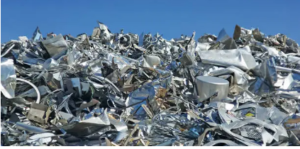 The Australian Steel Institute (ASI) is calling for a ban on exporting unprocessed ferrous scrap. It would free up domestic markets for processed junk, decrease our sector’s greenhouse gas emissions and prevent environmental damage overseas. For quality scrap metal and steel Adelaide, check this out.
 Backing up your website and data is essential in protecting against accidental deletions or hardware damage and providing the opportunity to recover in case it was lost during migration processes.
 As youth pastors, we are often overwhelmed by the challenge of keeping our students engaged. This webinar will offer a new perspective on equipping teens with relational evangelism, including tools to help them read their Bibles.
 Athletes undergo a considerable amount of physical stress on their bodies. This puts them at risk of serious injuries. An Adelaide sports physio can assess their musculoskeletal system to look for and reduce any inefficiencies contributing to injury.
 Prawns are highly perishable and require freezing after harvesting to preserve their freshness. This ensures that prawn dishes at restaurants or food carts are not only jumbo but also delicious and safe to eat.
 Chiropractic adjustment is a hands-on technique in which a chiropractor manipulates a joint (typically the spine). They employ various techniques to increase muscle mobility and flexibility – mobilisation, manipulation, stretching and massage therapy among them – for improved movement and flexibility of your muscles, joints and soft tissues. Multiple studies have proven it can reduce pain levels significantly as well as decrease disc herniations levels, increase range of motion and improve posture.
 Unlike popular belief, increasing the torque of your vehicle doesn’t necessarily consume more fuel. It can improve your car’s efficiency by using the energy it consumes more efficiently.
 The South Australian government recently introduced new legislation to make it easier for homeowners to build a granny flat. The new regulation, the Affordable Rental Housing State Environmental Planning Policy (SEPP), allows residential homeowners to avoid some planning approval requirements if they meet specific minimum requirements. However, it’s still best to consult a granny flat expert to ensure your development meets your area’s zoning rules.
 Dr Barb Morris graduated in medicine from Flinders University in 1990 & has been with the clinic since 1996. She enjoys all aspects of general practice, particularly chronic disease management & paediatric care.