
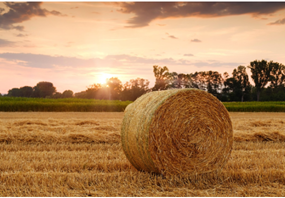
Round bales stored directly on heavy clay can face a moisture problem that starts from the ground up. This is especially relevant across the Liverpool Plains and Darling Downs, where black cracking clays can hold substantial amounts of water. Queensland Government describes Vertosols as cracking clays with a large water-holding capacity, while Liverpool Plains soils include extensive black cracking clays that can remain wet after heavy rainfall.
Using high-quality net wrap helps the bale maintain a tight, well-formed surface that sheds rainfall more effectively. However, net wrap is only one part of moisture management. Bale density, ground contact and storage-site drainage also determine how much moisture reaches the bottom of the bale.
Why Heavy Clay Creates a Bale Storage Challenge
Vertosols behave differently from lighter, faster-draining soils. Their high clay content lets them retain significant moisture, and they crack and swell as the soil dries and wets. Some Darling Downs clay profiles are described as slowly or very slowly permeable with imperfect drainage.
After rain, a bale sitting directly on this surface can remain in contact with damp soil for extended periods. The bottom section receives less airflow than the exposed upper surface, creating conditions where moisture can contribute to spoilage and deterioration.
Liverpool Plains black soils present a similar consideration. Some areas have very low surface gradients, meaning surface water can move slowly through depressions following rainfall.
How Net Wrap Helps Manage Moisture
A dense, consistently formed net wrap creates a more continuous outer layer around the bale than widely spaced twine. This helps rainfall move across the bale rather than penetrate deeply into exposed forage.
A high-quality net wrap moisture-barrier clay-soil application is particularly useful when the objective is to limit external moisture exposure. Tight weave construction and suitable water-repellent polymer characteristics can help the outer bale surface shed water, although net wrap should not be treated as a waterproof ground barrier.
Key characteristics to look for
When selecting net wrap for heavy-clay storage conditions, consider:
● Tight, consistent weave density across the full roll width
● Strong edge-to-edge coverage to reduce exposed shoulders
● Polymer formulation designed for outdoor agricultural use
● Reliable tensile and tear resistance during wrapping
● Consistent roll performance without loose sections or uneven feeding
● Compatibility with the baler’s recommended wrapping settings
A high-quality bale wrapping solution should also produce a compact, well-shaped bale. Dense bales generally sag less and have less surface area touching the ground, while tighter bales shed water more effectively.
Net Wrap Cannot Replace Good Bale Storage.
Even premium net wrap has limitations. If a bale is placed on saturated clay, the bottom surface remains exposed to moisture regardless of how effectively the upper bale sheds rain.
For heavy Vertosols, practical storage management should include:
● Selecting the highest, best-drained available area
● Avoiding depressions where water collects
● Using pallets, gravel or another drainage-improving base where practical
● Keeping bales tightly formed and properly wrapped
● Allowing airflow between stored bales
● Inspecting the underside of bales after prolonged wet weather
University of Minnesota Extension similarly recommends well-drained storage surfaces and coarse rock or pallets to reduce bottom spoilage in outdoor round-bale storage.
Protecting Bale Quality on Australian Black Soils
For growers and contractors in the Liverpool Plains, Darling Downs and other Australian cracking-clay regions, moisture management needs to begin before the bale reaches the storage yard.
High-quality net wrap supports better rain shedding by maintaining a tight outer structure, but it works best alongside dense baling and sensible storage-site selection. Where direct ground storage is unavoidable, reducing prolonged soil contact becomes particularly important.
The goal is not simply to keep rain off the top of the bale. It is to minimise the combined effect of rainfall, poor drainage, soil contact and restricted airflow.
Choose Net Wrap for the Whole Storage Environment
When purchasing net wrap for heavy-clay conditions, discuss the expected crop, baler, storage period, and local weather with your supplier. Ask about weave consistency, tensile strength, UV protection and water-shedding characteristics rather than choosing solely on roll price.
For operations across the Liverpool Plains and Darling Downs, selecting the right high-quality net wrap moisture-barrier clay-soil solution can help protect bale structure and reduce avoidable storage deterioration. Pair quality net wrap with dense bales and a well-drained storage surface for a more reliable approach to outdoor bale preservation.
—
Frequently Asked Questions
1. Can net wrap prevent bottom-bale rot completely?
No. Net wrap helps shed rainfall and maintain bale structure, but ground moisture can still cause deterioration. Drainage and reducing direct soil contact remain important.
2. Why are Vertosols challenging for outdoor bale storage?
Vertosols are heavy cracking clays with high water-holding capacity. Some areas also have slow permeability and imperfect drainage, allowing wet conditions to persist after rainfall.
3. Does tighter net wrap help shed rain?
Yes. A properly formed, dense bale with consistent net wrap generally sheds water more effectively than a loosely formed bale or one with widely spaced twine.
4. Should bales sit directly on black clay?
Where practical, avoid direct contact with wet clay. A well-drained base, coarse rock or pallets can reduce moisture exposure beneath stored bales.
5. What should contractors look for in net wrap?
Look for consistent weave density, reliable tensile and tear strength, good edge coverage, suitable UV protection and dependable feeding performance with the intended baler.