
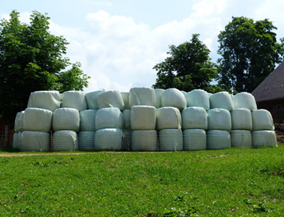
Choosing the right baling material can affect bale quality, handling time, storage performance and overall farm costs. For Australian producers looking to streamline their hay and silage operations, net replacement film for sale is an option worth considering. Film-on-film baling replaces conventional net wrap with a stretchable film that covers the bale and can remain with the forage during wrapping and feeding.
This can simplify bale preparation and reduce the need to separate netting from plastic film later. For farms managing large volumes of round bales, the potential savings in labour, material handling and waste management can make the technology particularly attractive.
What Is Film-on-Film Baling?
Film-on-film baling uses a dedicated baling film instead of traditional net wrap. The film is applied directly around the bale, providing containment before the bale receives its outer stretch-film wrapping.
Unlike conventional net wrap, the replacement film becomes part of the plastic wrapping system. This can make the bale easier to process because there is less risk of netting becoming mixed with forage during feeding or entering livestock areas.
For Australian operations, this approach can be particularly useful where baled material needs to be stored, transported and later opened efficiently.
Why Consider Net Replacement Film?
The main advantage is workflow efficiency. With traditional net wrap, operators may need to remove or manage netting when opening bales. Film-on-film systems eliminate that separate layer.
Potential benefits include:
● Simpler bale handling: One compatible agricultural wrapping material can streamline the baling and wrapping process.
● Reduced contamination concerns: Removing netting from the feeding process can help prevent loose net material from mixing with forage.
● Improved bale coverage: Film can provide a continuous surface around the bale when correctly applied.
● Easier waste management: Using compatible plastic wrapping materials may simplify collection and recycling after use.
However, results depend on the baler, film specification, crop conditions and operator settings. Producers should confirm compatibility with their machinery before changing materials.
Film on Film Round Baling NZ/AU: What Farmers Should Know
The film-on-film round baling NZ/AU approach has gained attention because Australian and New Zealand farms face demanding forage conditions, variable weather, and long storage periods.
Correct film tension, bale density and wrapping settings remain important. A replacement film is not simply a thinner version of conventional wrap. It needs to perform reliably during bale formation while working with the equipment’s feeding and cutting systems.
Farmers comparing mantis net replacement film or other NRF products should assess film width, thickness, roll length, machine compatibility and recommended application settings rather than choosing solely on price.
Recycling and Waste Management Benefits
Agricultural plastics require responsible disposal, but separating different materials can add time to farm operations. A film-on-film system can potentially reduce the amount of mixed wrapping material that needs to be handled after feeding.
This does not mean that used bale film can automatically be placed in household recycling. Manage Australian agricultural plastics in line with available local recycling programs and accepted material requirements.
Before buying replacement net film, check how used agricultural film can be collected or recycled in your area. Choosing a system that supports practical end-of-life handling can help reduce unnecessary waste on the farm.
Is It Cost-Effective?
The cheapest roll is not necessarily the lowest-cost option. Farmers should consider the total cost per bale, including material consumption, machine performance, labour and waste handling.
When comparing products, look at:
1. Cost per roll and estimated bale yield.
2. Film consumption at the required bale diameter.
3. Compatibility with existing baling equipment.
4. Bale integrity during transport and storage.
5. Local availability and recycling options.
For producers planning to buy NRF baling film, supplier support is also important. Proper machine setup can affect film usage and bale quality so technical guidance can add real value.
Choosing Net Replacement Film in Australia
Australian farms face varied conditions, from hot, dry inland regions to wetter southern growing areas. A suitable product should match the crop, baling conditions, storage method and machinery being used.
When evaluating net replacement film for sale, ask suppliers for technical specifications and compatibility information. A reputable agricultural plastics supplier should be able to explain recommended settings, expected application performance and appropriate disposal or recycling pathways.
Conclusion
Film-on-film baling can offer Australian agribusinesses a practical alternative to conventional net wrap. Combining bale containment with a compatible film-based wrapping system may simplify handling, reduce material separation, and support more efficient waste management.
If you are considering net replacement film for sale, compare the total operating cost rather than the purchase price alone. Speak with a specialist supplier, confirm baler compatibility and choose a product suited to your crop, climate and storage requirements.
—
Frequently Asked Questions
1. What is net replacement film?
Net replacement film is a baling material designed to replace conventional net wrap when producing round bales. It is used in a film-on-film wrapping system.
2. Can net replacement film be used with any baler?
Not necessarily. Compatibility depends on the baler model and wrapping system. Always check the manufacturer’s recommendations before purchasing.
3. Is net replacement film recyclable in Australia?
Used agricultural film may be recyclable through specific agricultural plastics recycling programs, but acceptance varies by location and material type. Check local requirements before disposal.
4. Is film-on-film baling cheaper than using net wrap?
It can reduce certain handling and waste-management costs, but overall economics depend on film consumption, bale numbers, machinery settings and local material prices.
5. Where can I buy NRF baling film?
Farmers can buy NRF baling film through agricultural plastics and farm-supply specialists. Compare specifications, machine compatibility and supplier support before ordering.